Fire Alarm Maintenance –
For many businesses in Keighley, fire alarm servicing is sometimes viewed as a routine obligation that can be postponed when schedules become busy. However, delaying commercial fire alarm maintenance can create serious risks for both life safety and business continuity.
A commercial fire alarm system is only effective if every component continues operating correctly. Without regular maintenance, faults may develop gradually and remain unnoticed until the system is needed during a genuine emergency.
Fire Alarm Systems Deteriorate Over Time
Even modern fire alarm systems experience wear and degradation.
Common issues that develop over time include:
- detector contamination
- battery deterioration
- wiring faults
- damaged devices
- communication errors
- and power supply problems
Without servicing, these faults may reduce the effectiveness of the entire system.
Dust and Environmental Conditions Affect Detectors
Commercial environments naturally expose detectors to:
- dust
- airborne particles
- steam
- humidity
- and temperature fluctuations
Over time, contamination can affect detector sensitivity and lead to:
- false alarms
- delayed activation
- or complete device failure
This is particularly common in:
- warehouses
- workshops
- kitchens
- industrial premises
- and refurbishment environments
Battery Failure Can Leave Buildings Unprotected
Most commercial fire alarm systems include standby batteries that maintain operation during mains power failure.
Ageing batteries may:
- lose charge capacity
- fail unexpectedly
- or stop supporting the system correctly
If backup batteries fail during a power cut, the entire fire alarm system may become unavailable.
Delayed Maintenance Increases False Alarms
Poorly maintained systems are far more likely to produce unwanted alarm activations.
Common causes include:
- dirty detectors
- ageing sensors
- unstable power supplies
- or damaged devices
Frequent false alarms create:
- operational disruption
- evacuation fatigue
- staff complacency
- and reduced confidence in the system
Faults Often Develop Gradually
Many businesses assume faults appear suddenly. In reality, problems often develop slowly over time.
Examples include:
- intermittent detector communication
- gradual battery decline
- minor wiring issues
- and slowly increasing contamination
Routine servicing helps identify these early warning signs before they become critical failures.
Commercial Fire Alarm Maintenance Supports Compliance
Commercial fire alarm systems should normally be maintained in line with BS 5839 recommendations.
Professional maintenance helps demonstrate:
- responsible fire safety management
- system reliability
- legal compliance
- and insurance due diligence
Businesses should retain:
- servicing certificates
- maintenance records
- fault logs
- and inspection documentation
Building Changes Can Affect System Performance
Commercial premises in Keighley often evolve over time.
Changes such as:
- office reconfiguration
- new partitions
- storage increases
- machinery installation
- or occupancy changes
can all affect fire alarm effectiveness.
Maintenance visits provide opportunities to review whether the existing system still suits the building layout and risks.
Professional Servicing Involves More Than Basic Testing
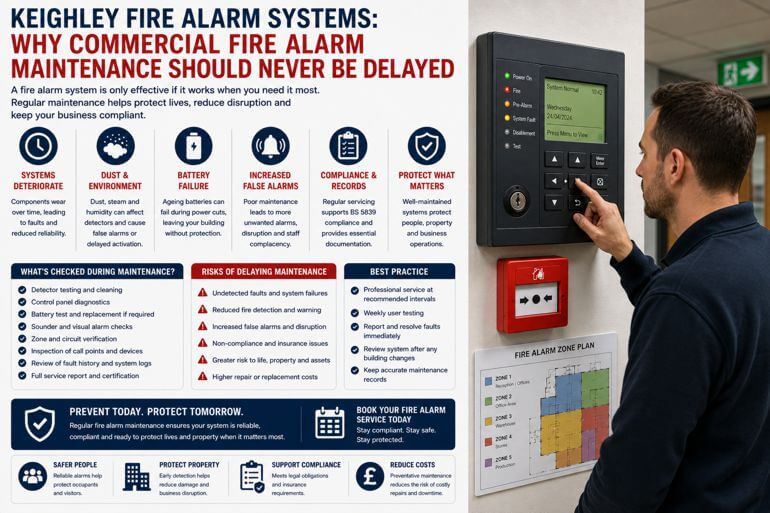
A full maintenance visit may include:
- detector testing
- panel diagnostics
- battery load testing
- sounder checks
- device cleaning
- zone verification
- and inspection of fault history
This level of inspection goes far beyond simple user testing.
Weekly User Testing Still Remains Important
Professional servicing should operate alongside:
- weekly call point testing
- visual inspections
- and fault monitoring
Regular user checks help identify issues between maintenance visits.
Ignoring Minor Faults Can Create Bigger Problems
Businesses sometimes ignore small warnings because the system still appears operational.
However:
- disabled detectors
- communication faults
- or battery warnings
can all reduce protection significantly.
Even minor faults should always be investigated promptly.
Reliable Systems Improve Emergency Response
Well-maintained systems provide:
- faster fire detection
- clearer alarm indication
- more reliable evacuation warning
- and improved emergency coordination
This helps protect:
- staff
- visitors
- property
- and business operations
Fire Alarm Maintenance Is Preventative, Not Reactive
The purpose of maintenance is not simply to repair faults after failure. It is to prevent failures from occurring in the first place.
For businesses in Keighley, regular commercial fire alarm servicing helps ensure:
- continuous compliance
- improved reliability
- reduced false alarms
- and safer evacuation
Delaying maintenance may appear convenient in the short term, but it can create much greater risks and disruption later.
Frequently Asked Questions
How often should commercial fire alarms be serviced?
Commercial systems should normally receive professional servicing at regular intervals alongside weekly testing.
Can dirty detectors cause false alarms?
Yes. Dust and contamination are common causes of unwanted fire alarm activations.
Should fire alarm systems be reviewed after building changes?
Absolutely. Layout and occupancy changes can affect detector coverage and system effectiveness.