Cause & Effect Matrix –
Modern commercial fire alarm systems are now far more advanced than simple bell-only installations. Many systems across Keighley control:
- smoke ventilation
- automatic doors
- lift grounding
- phased evacuation
- suppression interfaces
- and building-wide emergency procedures
All of these functions rely heavily on accurate cause and effect programming — and more importantly, proper cause and effect matrix testing.
Without thorough testing, even professionally installed systems may not respond exactly as intended during a real emergency.
What Is A Cause & Effect Matrix?
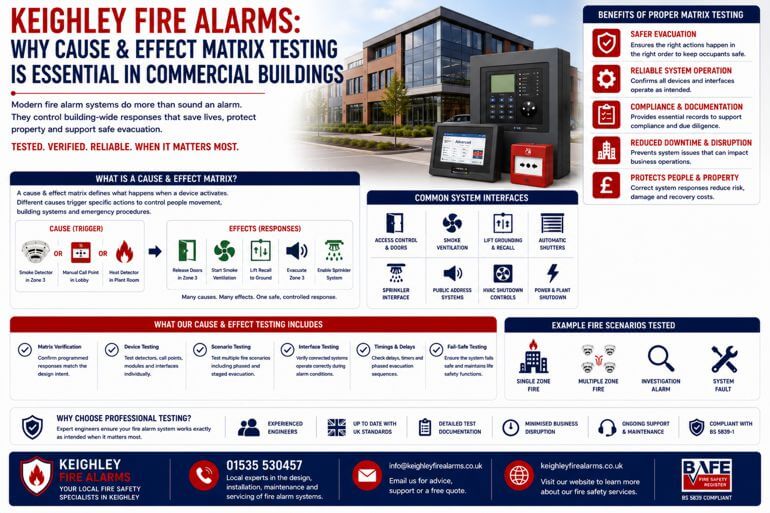
A cause and effect matrix is essentially the operational logic behind a fire alarm system.
It defines:
- what device activates
- what response follows
- which areas evacuate
- what equipment shuts down
- and how the system behaves
during different fire scenarios.
For example:
- smoke detection in one zone may release magnetic doors
- while another area may trigger smoke extraction
- or phased evacuation only
depending on building requirements.
Why Testing Is So Important
Programming alone is not enough.
Every fire alarm action must be physically tested to confirm:
- devices operate correctly
- interfaces respond properly
- evacuation sequences work
- and building systems interact as intended
Real-world testing ensures the system performs correctly under live conditions.
Modern Buildings Often Use Multiple Interfaces
Commercial buildings may integrate fire alarms with:
- access control
- smoke ventilation systems
- sprinkler interfaces
- automatic shutters
- public address systems
- and HVAC shutdown controls
Testing verifies all connected systems communicate properly during alarm conditions.
Incorrect Programming Can Create Serious Risks
Poorly configured or untested programming may result in:
- delayed evacuation
- doors failing to release
- smoke systems not activating
- or incorrect alarm sequences
This can affect both:
- life safety
- and operational response
during emergencies.
Phased Evacuation Requires Precise Operation
Larger buildings sometimes use:
- staged evacuation
- phased evacuation
- or investigation delays
rather than immediate full evacuation.
These strategies require extremely accurate testing to ensure:
- correct timing
- correct zone activation
- and safe occupant movement
Building Changes May Affect Programming
Commercial premises frequently undergo:
- refurbishments
- tenant changes
- office alterations
- and operational expansion
Even relatively small layout changes may affect:
- detection logic
- evacuation zones
- or interface operation
which is why retesting remains important following modifications.
Documentation Supports Ongoing Compliance
Professional matrix testing helps provide:
- commissioning records
- interface verification
- test documentation
- and operational confirmation
supporting ongoing fire safety management and compliance responsibilities.
Engineers Test Multiple Fire Scenarios
Cause and effect testing often involves checking:
- single detector activation
- multiple detector scenarios
- fault conditions
- interface sequencing
- and fail-safe operation
to ensure systems behave correctly under varying conditions.
Business Continuity Also Depends On Correct Operation
Fire alarm systems are designed not only to protect life, but also to:
- minimise disruption
- support controlled evacuation
- and help manage emergency response
Reliable cause and effect operation supports:
- safer evacuation
- improved incident management
- and reduced operational confusion
Intelligent Fire Alarm Systems Require Intelligent Testing
For businesses in Keighley, modern commercial fire alarm systems increasingly rely on complex programming and integrated building responses.
Professional cause and effect matrix testing helps provide:
- reliable system operation
- safer evacuation performance
- stronger compliance
- and greater confidence in emergency response procedures
As commercial buildings continue becoming more technologically integrated, accurate fire alarm testing is becoming an increasingly important part of modern life safety system management.
Frequently Asked Questions
What is a fire alarm cause and effect matrix?
It defines how the fire alarm system and connected building systems respond during different fire events.
Why is cause and effect testing important?
It confirms all programmed responses operate correctly during real alarm conditions.
Can building alterations affect cause and effect programming?
Yes. Layout changes and system modifications may require programming updates and retesting.