
Manufacturing Fire Detection –
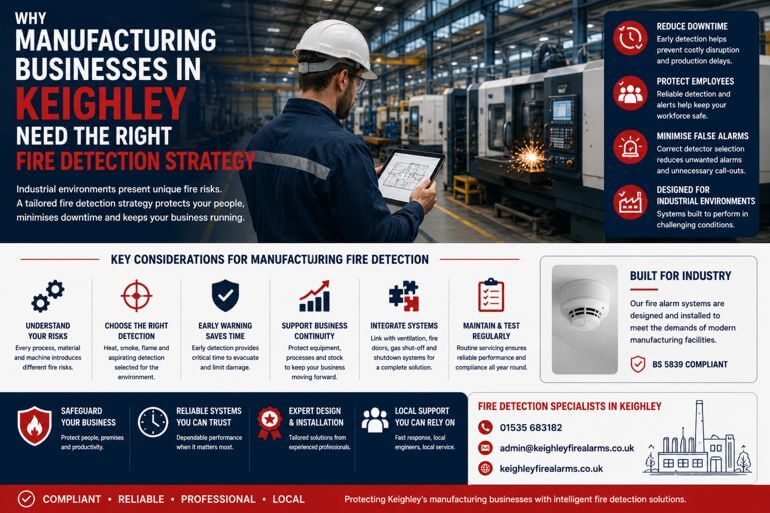
Manufacturing environments present some of the most demanding conditions for commercial fire alarm systems. Dust, machinery, changing temperatures, high ceilings and busy production areas all influence how fire detection should be designed and maintained. A system that performs perfectly in an office may not provide the same level of protection on a factory floor.
For manufacturing businesses in Keighley, selecting the correct fire detection strategy is about more than meeting legal obligations. It helps protect employees, minimise production downtime and reduce the financial impact of an unexpected fire.
Every Manufacturing Facility Is Different
No two production sites operate in exactly the same way. A food manufacturer has different fire risks from an engineering workshop, while a plastics manufacturer requires a different detection approach to a timber processing facility.
Before designing a fire alarm system, it’s important to understand:
- Production processes
- Sources of heat
- Dust and airborne particles
- Storage arrangements
- Machinery locations
- Occupancy levels
- Shift patterns
- Escape routes
These factors influence where detectors should be installed and which detection technologies are most appropriate.
Reducing Unwanted Fire Alarms
False alarms can be particularly disruptive within manufacturing environments.
Evacuating staff, stopping machinery and restarting production all carry significant costs. In some industries, a single interruption can result in wasted materials or delays to customer orders.
Selecting suitable detectors for the working environment helps reduce nuisance activations whilst maintaining dependable fire protection.
Supporting Business Continuity
Manufacturing businesses often operate to tight production schedules.
A fire affecting even a small area can interrupt manufacturing, delay deliveries and impact customer relationships.
Early fire detection provides valuable time for evacuation and emergency response, helping limit damage and supporting faster recovery.
Planning for Future Growth
Successful manufacturers rarely stand still.
Additional production lines, warehouse extensions and new machinery may all require changes to the fire alarm system.
Choosing a scalable addressable system allows detection to expand alongside the business without replacing the entire installation.
Integrating Fire Protection
Modern manufacturing sites frequently combine fire alarm systems with other building services, including:
- Smoke ventilation
- Fire doors
- Roller shutters
- Gas isolation
- Access control
- Plant shutdown systems
Integrating these functions helps create a coordinated response during an emergency.
Routine Servicing Matters
Manufacturing environments can place greater demands on fire alarm equipment than many other commercial premises.
Regular servicing helps identify contamination, wear and developing faults before they affect system performance, reducing unexpected downtime and helping maintain reliable protection throughout the year.
Fire Alarm Solutions for Manufacturers in Keighley
Every manufacturing facility has its own challenges, and every fire alarm system should reflect the risks within that environment.
Whether you operate a fabrication workshop, engineering company, production facility or industrial unit, a professionally designed fire alarm system can help protect your workforce, safeguard valuable equipment and support business continuity.
For manufacturing businesses across Keighley, investing in the right fire detection strategy is an investment in the long-term resilience of the business itself.